Powered by SimpleLab: Detroit Hispanic Development Corporation
Making water testing accessible for Detroit's Spanish-speaking residents
Welcome to another edition of "Powered by SimpleLab," a series where we spotlight real customers using SimpleLab to simplify laboratory testing, verify quality, and deliver results at scale.
In this edition, we're featuring Detroit Hispanic Development Corporation (DHDC), a community organization in Southwest Detroit. Working in collaboration with a University of Michigan research team, DHDC secured grant funding to make lead and copper water testing accessible to Spanish-speaking residents in the Detroit area. Through their Promotoras de Agua initiative, the program tested residents' drinking water at a Michigan EGLE-certified laboratory, with results reported back to DHDC so their team could guide residents through what the numbers meant and what to do next.

Here's how they did it, in their own words.
Tell us a little about Detroit Hispanic Development Corporation and the community you serve.
Southwest Detroit is a vibrant and resilient community with a large Latino population that includes both recently arrived immigrants from across Latin America and families who have called the neighborhood home for generations. One of our biggest values is mutual support. Our neighbors look out for one another, share resources, and work collectively to overcome challenges. This is especially important, as Southwest Detroit has experienced decades of disinvestment while facing increasing industrial pollution and gentrification.
Our mission at DHDC is to provide innovative programming rooted in the rich culture of Southwest Detroit that creates individual and community change. Our vision is a community that is thriving, culturally vibrant, and safe, where everyone has quality opportunities for self-determination, education, and personal wealth. Our work is grounded in the belief that the people most affected by community challenges are also those best positioned to lead meaningful and lasting solutions.
What's the goal behind this lead and copper testing program, and why did water quality feel like an important place to focus?
Cumulative exposure to contaminated water, due to proximity to multiple industries and aging water infrastructure, places Detroit residents at higher risk of negative health outcomes. Mining, smelting, and manufacturing activities within the automotive industry have contributed to lead contamination, and rusting pipes can cause lead to seep into water sources. Frequent water shutoffs make this worse: when water sits stagnant in the city system, it can damage the structural integrity of the pipes. Detroit residents are ten times more likely to have a water quality violation than Michigan as a whole, and minority and lower-income communities in Michigan are three times more likely to be exposed to drinking water contaminants. Unjust and unequal exposure to poor water quality is, at its core, a health equity issue.
Our community has experienced a number of events that raised concern about water safety. In November 2024, households in Southwest Detroit received a letter from the Detroit Water & Sewerage Department (DWSD) alerting residents that some or all of their service lines were made of "an unknown material, which may be lead." Then, in February 2025, a water main rupture flooded streets and several hundred homes with frigid water in the middle of the night, leading to the evacuation of approximately 400 families. DHDC helped to provide essential leadership for flood remediation and disaster relief. Together, these events created widespread concern and a real need for clear information.
Your Promotoras (community health promoters) are central to this work. What role did they play in reaching residents and building trust?
With any community-based work, trust is essential to achieve meaningful and lasting outcomes. At DHDC, we have built strong relationships with community members over the years, creating a foundation of trust that empowers residents to become active participants in improving their community. Our promotores have been involved in fighting for better education in public schools, mobilizing during election seasons, and sharing community issues like lead in water with us and encouraging us to step into action.

That trust also lives in the relationships our promotores have within their own neighborhoods. What made this project so successful is that many of the promotoras were engaging with neighbors they already knew and trusted on their own streets. These existing relationships allowed for more honest conversations about the risks of lead exposure. Because the conversations were rooted in trust and shared community, residents were more willing to ask questions, express concerns, and take part in water testing.
Making testing accessible to Spanish-speaking residents takes intention. How did your team approach that?
The testing instructions from SimpleLab for the first- and fifth-liter sampling were only available in English, so we translated them into Spanish. Participants also received an in-person demonstration from one of our team members, Denysse, to make sure the sampling process was clear and consistent. Our outreach was grounded in a relational organizing approach, which relies on volunteers mobilizing people they already know, and we were mindful of the impact of ICE presence in the neighborhood and the importance of building trust. Promotoras completed certification and practiced a door-to-door script so they were prepared to communicate confidently with residents. When sharing results, participants were contacted by both phone and letter. Bilingual communication was maintained throughout the entire process so participants could engage comfortably and fully at every stage.

This program brought together a community organization and an academic research team. What did the collaboration between DHDC and the University of Michigan look like?
Reflecting on the Promotoras de Agua initiative showed a process that was collaborative, thoughtful, and equity-centered. At the end of our first round of testing, we hosted a reflective focus group so each member of the leadership team could share their experiences and offer thoughts on how the project should proceed. Throughout, promotoras and organizers asserted that lived experience and community histories should carry weight equal to formal study metrics in shaping program decisions. Structural factors, including limited capacity and safety risks, shaped what was feasible in practice. Trust within the team wasn't a starting condition but an ongoing practice, built through consistent communication, role clarity, and attention to the power dynamics between community and academic partners. The project was a valuable opportunity to reflect on how equity-centered public health partnerships can share authority over defining methods and meaningful outcomes, while building structures designed to support organizing realities and community-defined forms of evidence.
What was the sample collection experience like for residents?
When speaking with residents at their doors, our promotoras provided an informational flier explaining the program and how to do the test, along with a checklist to help ensure the tests were done correctly. The checklist included:
- Do the test the first time you turn on your water in the morning
- Line up all the bottles in numerical order
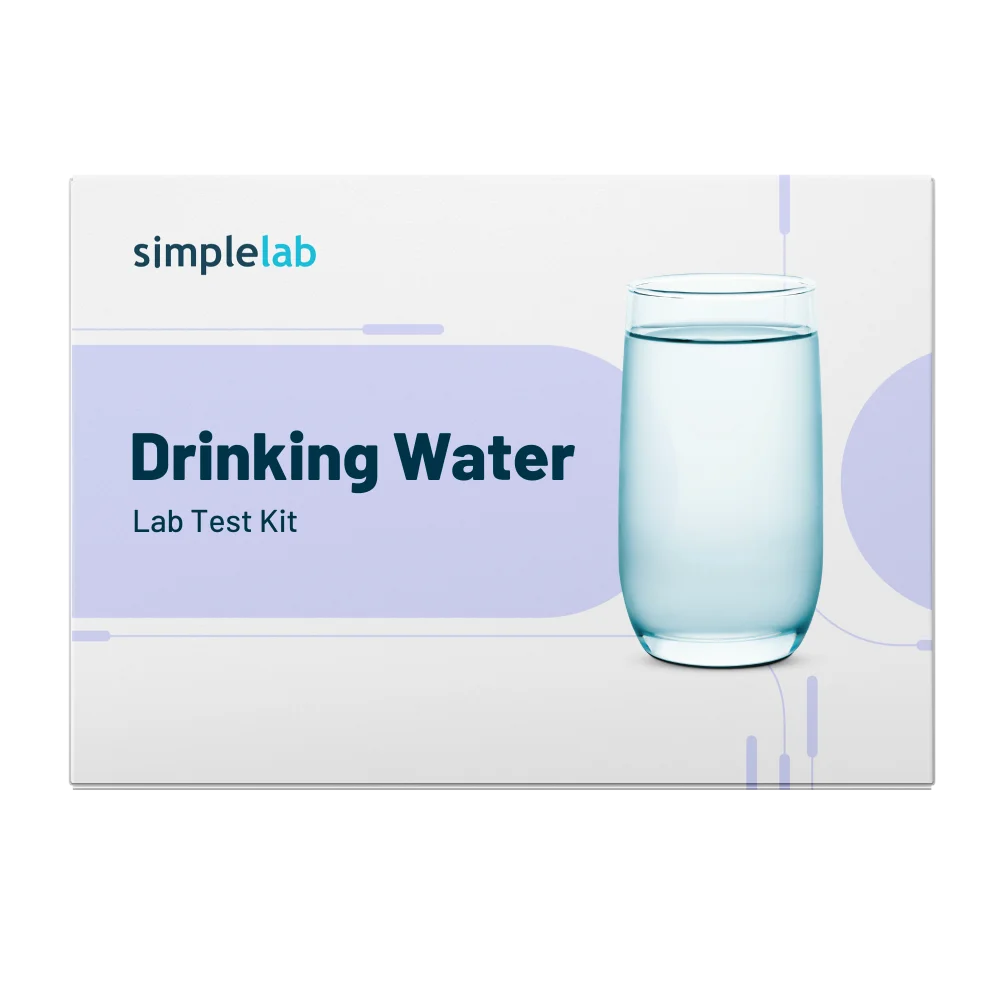
- Fill up all five 1L bottles with cold water
- Fill up all bottles in the same sink
- Tightly close all of the bottles
- Place all bottles back in the box

The step-by-step checklist helped residents feel confident conducting the test themselves while ensuring the best results. To make each resident feel as supported as possible, we also gave them the cell phone numbers of the two primary organizers on the project, so they could call or text with any questions.
Residents were given about two days to complete the test before we followed up to schedule a pickup time. Calling, picking up the packages, and shipping them ourselves was tedious, but it allowed us to receive results back with more urgency. While residents awaited their results, each household received a Brita pitcher and a Brita Elite filter to help reduce potential lead exposure.
When results came back from SimpleLab, we analyzed them with a local water engineering consultant and created messaging and recommendations tailored to each resident's lead levels. Every resident received a personalized letter by mail with their results, recommendations for reducing lead exposure, and a QR code linking to additional educational resources to help them understand their results and identify next steps.
On the logistics side, how did SimpleLab help support the program?
Our goals were twofold: to provide residents with clear, reliable information about the lead levels in their drinking water, and to generate credible data that could be used to advocate for accelerated lead service line replacement and improved water infrastructure. SimpleLab's testing methodology and State of Michigan certification ensured that the lead and copper sampling met established regulatory standards, so the results could serve both as valuable information for residents and as reliable evidence for community organizing and policy advocacy.
The SimpleLab portal and online support were also an effective project management tool. We could easily keep track of each test, where it was in the process, and what the results were. Because our team was coordinating multiple tests at once, that level of organization was very beneficial. Any time we were unsure of something, their live chat was available and answered by kind, attentive staff.
Are there any early results, moments, or outcomes you're proud of?
We're proud of the number of tests we completed within a month, before nighttime temperatures got too low to accurately test for lead in water. Creating trustful spaces that encouraged feedback from the promotoras enabled them to shape the study design and ultimately engage more households. A relational approach to water sampling helped us recognize the complex lived realities of residents and strengthened community capacity for lead-in-water sampling.

What's next for the program, and what would help make work like this easier to repeat or scale?
We're excited to continue lead testing in an additional 100 homes in our Southwest Detroit neighborhoods, and to begin organizing residential power to advocate for better water infrastructure. Promotoras will host conversations with neighbors on the block to talk about results, risks, and how collective action can encourage the City to implement a more transparent and equitable lead service line replacement process.
We look forward to continuing our work with SimpleLab as we expand. One enhancement that would further strengthen the resident experience is an easy-to-understand interpretation of laboratory results. The reports provide accurate technical information, but many residents would benefit from a brief explanation of what their lead levels mean, the degree of potential concern, and recommended next steps. Providing that context alongside the results would help residents more confidently understand their water quality and make informed decisions while awaiting infrastructure improvements.
Programs like DHDC's Promotoras de Agua show what's possible when trusted community organizations have access to accurate, regulator-grade testing. SimpleLab helps mission-driven teams build custom testing programs, route results where they need to go, and manage everything from one place.
Stay tuned for more stories from our growing network of labs, businesses, and change-makers.
Follow DHDC's Work
Want to learn more about Detroit Hispanic Development Corporation and the Promotoras de Agua initiative? Visit dhdc1.org for the latest updates, and follow along on Facebook, Instagram, and LinkedIn. This work was made possible in partnership with a University of Michigan research team and water quality support from Safe Water Engineering.
Share Your Story
If you're a current SimpleLab customer or partner and would like to be featured in an upcoming edition of Powered by SimpleLab, reach out to us at hello@gosimplelab.com.
Simplify Testing for Your Program
Planning a study or community initiative that involves sampling at scale? Contact our team to explore custom testing options, or create an account to see how SimpleLab makes it easy to order, track, and manage laboratory testing in one place.
Sam brings expertise in water chemistry and environmental engineering to support scientific standards at SimpleLab. She earned Bachelor’s and Master’s degrees in Environmental Engineering and has experience in environmental analytical chemistry research.
About SimpleLab
SimpleLab combines world-class laboratory science with customer service to ensure testing your environment is simple, fast and factual. Everything we do is driven by data and supported by a team of experts ready to answer your questions.