Powered by SimpleLab: UC Irvine and the LA Fire HEALTH Study
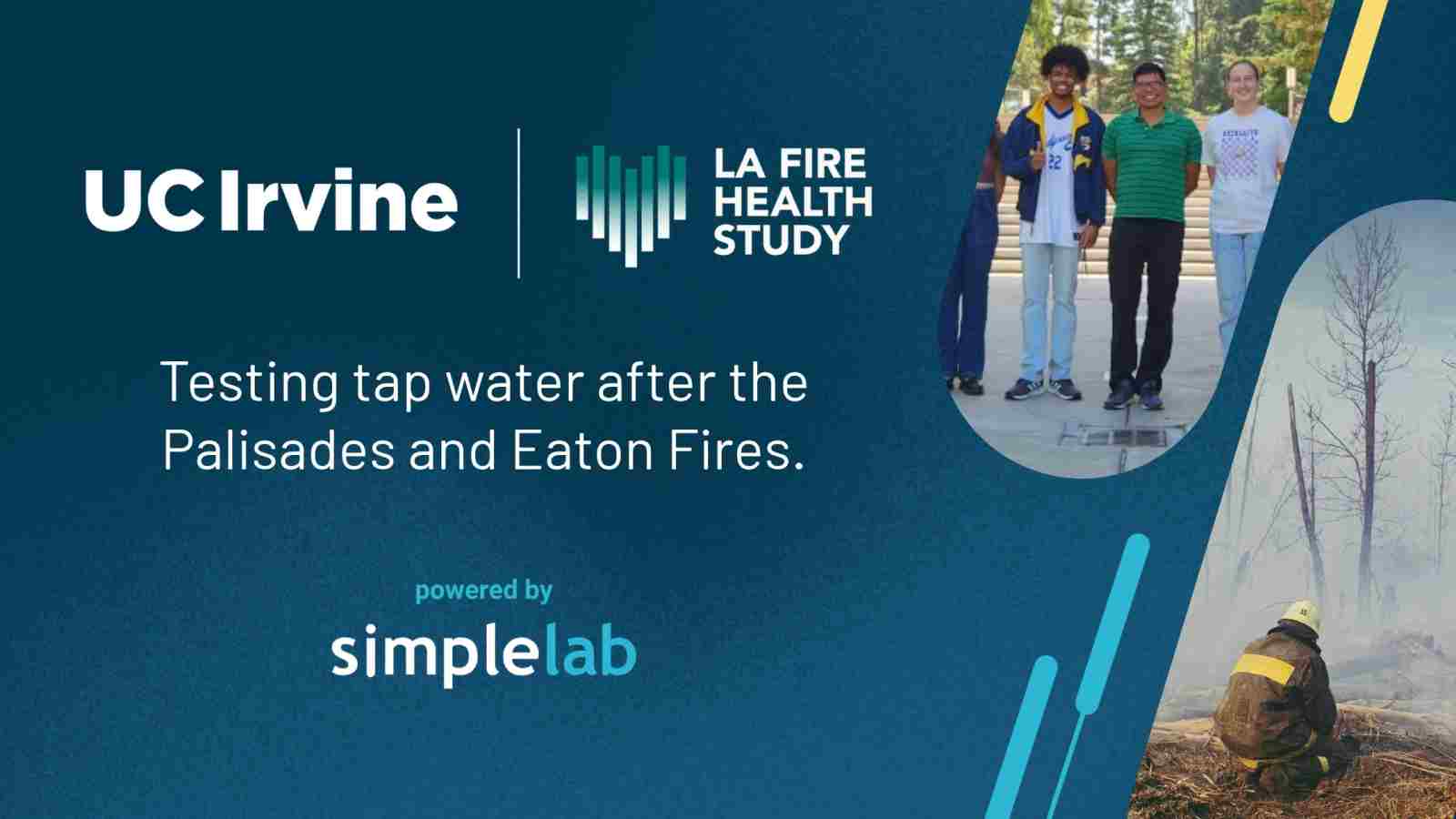
Featuring Professor Chris Olivares
Welcome to another edition of "Powered by SimpleLab," a series where we spotlight real customers using SimpleLab to simplify laboratory testing, verify quality, and deliver trusted results at scale.
In the aftermath of the January 2025 Palisades and Eaton Fires, a research team at the University of California, Irvine, led by Professor Chris Olivares, partnered with SimpleLab to measure volatile organic compounds (VOCs) in residential tap water across affected Los Angeles communities. “Do Not Use” advisories had been issued for many homes over concerns about benzene and other VOCs, and residents needed localized data about their own water.
Between February and April 2025, the team collected tap water samples from 53 homes in the Palisades and Altadena areas as part of the LA Fire HEALTH Study. SimpleLab’s laboratory network provided the analytical capacity and turnaround speed the timeline required, and results were returned directly to participating households. Findings were published in a public data brief in May 2025: All but one sample fell below California’s Maximum Contaminant Limits for every compound tested, with a single home exceeding the 1 part-per-billion limit for benzene.
We spoke with Professor Olivares about what it takes to stand up a water quality study in the middle of a disaster response. Keep reading for our full interview.
Meet Professor Olivares!

Chris Olivares, Assistant Professor of Civil & Environmental Engineering, University of California, Irvine
Tell us about your lab and what a typical day looks like.
I lead a university research lab that studies water quality after fires. Every day is different, some days I’m working closely with my students in the wet lab, other days we are performing field work as part of quick response to fire, and other days we’re presenting our findings to colleagues, stakeholders, and government officials. We do this to better inform policies that adapt to disasters, such as the 2025 Los Angeles Fires.
What made this study so urgent?
The 2025 Los Angeles Fires (Eaton and Palisades Fires) very rapidly impacted tens of thousands of people and, as most fires, were unexpected. Research on other fires showed evidence of high levels of volatile organic compounds (VOCs) in drinking water from damaged plastic pipes, smoke intrusion, and other sources when people return to their home after a fire. We knew that in homes that were not destroyed by the LA Fires, this could be an issue when people started returning to evaluate remediation needs for their homes. Impacted water agencies issued Do Not Use advisories while they tested for VOCs in their service connections. However, testing at the household tap water level is not typically feasible so we thought we could address this gap in testing and provide water quality results to households.

How did you find 53 households willing to participate while their communities were still recovering?
We were very fortunate to join the LA Fire HEALTH Study, a research consortium that quickly came together to understand public health exposures across air, water, indoor/outdoor dust and ash, etc. The Health Study consortium had held online webinars where people could sign in to participate. Then the study team participant coordinator scheduled appointments when participants were available to sample air, dust and ash, as well as tap water. This last part was our contribution. Essentially we just made sure to show up where the participant coordinator indicated us. In the end, half of the participants were in each of the fire impacted areas.

You sampled the homes yourself rather than having residents do it. Why?
We did not want to burden participants more than they were already with the fire impacts, so my research team and I met the participants at their homes and we performed the sampling for them. Also, sampling VOCs can be difficult because of their volatile nature, the need to avoid air bubbles in the collection vials, and a quick turnaround was needed. We also took the samples with the pre-frozen packs and immediately dropped the kits at the nearest FedEx to make sure to maintain sample preservation and a quick turnaround time. We used the sampling appointment to answer any preliminary questions about water quality (and other LA Fire Health researchers answered questions related to other environmental media).

Why was turnaround time such a constraint?
Measuring volatile compounds (VOCs) needs a quick turnaround time from sampling to analysis and careful sampling because they can start decomposing or start evaporating away if there are air bubbles when collecting or perhaps they can start absorbing into sampling tubes. Because we had to drive all over the Los Angeles region to sample, then take them back to the lab, it would mean we needed a large team (which we didn’t have) to be able to handle a proper quick turnaround. This is why the partnership with SimpleLab was crucial so we could sample ourselves following best practices and ensure the samples were shipped and analyzed in the proper time.
How did you decide which test to use?
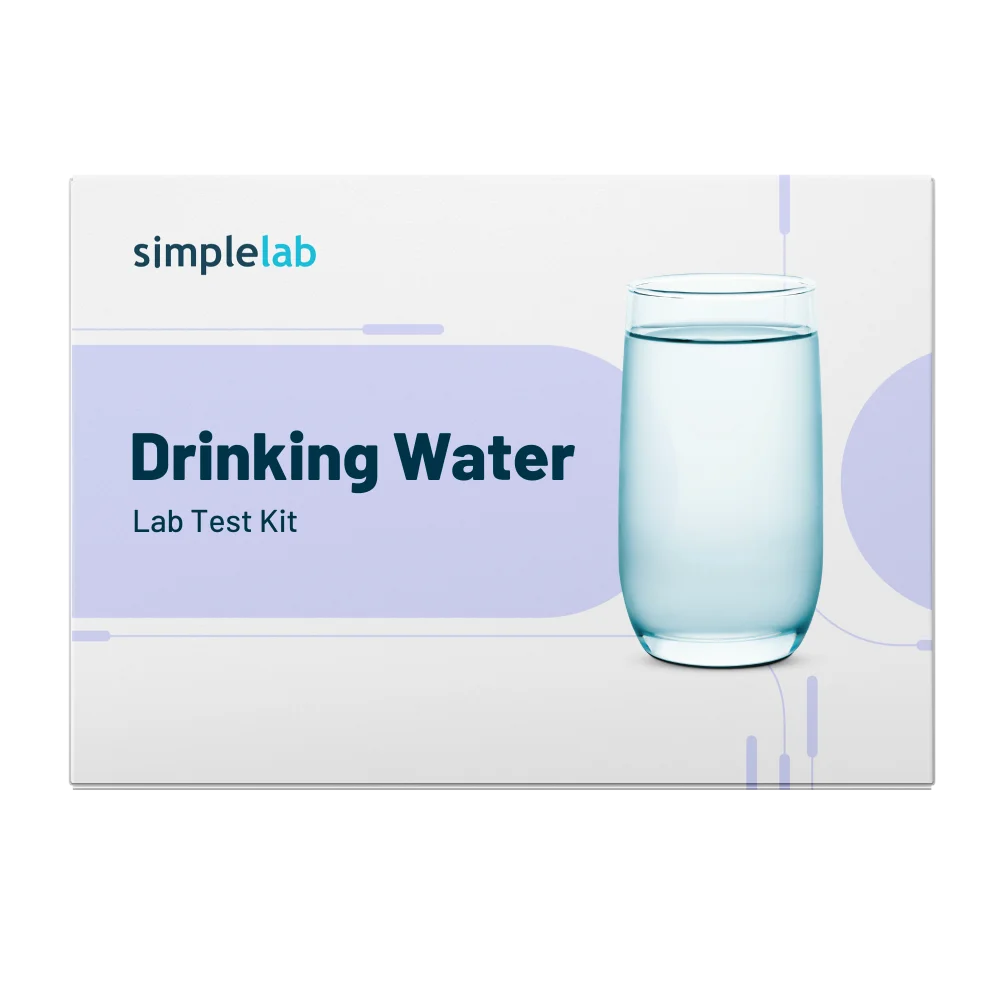
We were very fortunate to consult with SimpleLab to evaluate which of the testing kits and methods available would be appropriate for the study. We were primarily interested in VOCs because previous studies had identified benzene and other VOCs after fires. Although there is no standard method designed specifically for fire impacts in drinking water, EPA Method 524.2 includes benzene and other VOCs so we selected it. We ended up selecting the Drinking Water Test: Level 2 + Bacteria Kit which included VOC testing but also metals, E. coli, and other drinking water parameters although VOC was the main focus.
What gave you confidence in the data quality?
It was very important to the research and the participants to get results soon. Our samples were analyzed by a lab in San Diego and we were able to identify their certification for each analyte and the test. In retrospect, many local commercial labs were receiving multiple samples for testing (not just water) and SimpleLab’s commercial lab network enabled us to have our samples processed within the quick turnaround we needed.
How did results get back to participants?
The SimpleLab website had a dashboard that enabled my research team and I to track the status of each kit (shipped, received in lab, testing, results ready). Once the results were ready for a study participant, the participant and my team received an email. We then followed up with the participant to walk through their results and what they meant. The reports had helpful visuals but we helped explain what the different numbers meant (method name, limit of detection, analyte units) as well as general tap water quality questions (definition of a drinking water maximum contaminant level, state vs. federal limits), and actionable points (flushing water when they returned home) based on California Water Boards guidance.
How did people react to seeing their own numbers?
Thankfully, almost all of the tests showed VOCs below the regulatory limits, which eased participants’ concerns in general. We did hear back about other water quality concerns, such as some metals in water which were also below regulatory limits, and questions about water filtration. I think walking through the results and providing actionable points was helpful to ease concerns and most of all to convey that in general water quality was safe, but flushing was recommended upon the return to their homes.
What did the findings tell you?
Thankfully, most of the results were below regulatory limits, and when VOCs were detected, they were at very low levels. To me, this suggests that since this pollution issue was discovered almost a decade ago, we have a framework (testing and flushing) by water utilities and providers that mitigate the downstream impacts of VOCs in tap water after fires.
University budgets and Institutional Review Board (IRB) timelines don’t usually move at disaster speed. How did that go?
We were very fortunate that our lab had been preparing for the possibility of a scenario like this. We had two available funds (funds from the Spiegel Family Foundation/LA Fire Health Study and NSF CAREER award) that made it possible to quickly source the kits and mobilize samples. For the first batch of kits, I purchased them directly and had them reimbursed to make sure we were ready to sample within a few days. We were able to process the IRB permit with the university relatively speedily as well thankfully.
What would make this easier next time?
I think having a network of researchers from different fields (like the LA Fire Health Study) was instrumental because it let us coordinate sampling of different environmental media and minimize the additional burden to participants. I think having a repository or sample IRBs/templates might be useful for new researchers (this was our first project sampling in people’s homes), as well as a report-back framework. I think having a consultation with partners like SimpleLab would be helpful to identify possible parts of the study that might allow researchers to focus on analyses or tests that go beyond commercially available ones and have a more complete picture of a rapid-response research.

At SimpleLab, we’re proud to support the researchers and community partners working to make safe, trusted drinking water accessible to everyone. We’re especially grateful to Chris, his team at UC Irvine, and their partners across the LA Fire HEALTH Study consortium for mobilizing so quickly after the fires, and for making sure every participating household got answers it could use.
Stay tuned for more stories from our growing network of labs, businesses, and changemakers.
Follow Chris’s Work
Want to learn more about this research? Read the LA Fire HEALTH Study data brief on VOCs in tap water for the full findings, or visit LAFireHEALTH.org to follow the consortium’s ongoing work across air, water, dust, and ash.
Share Your Story
If you’re a current SimpleLab customer or partner and would like to be featured in an upcoming edition of Powered by SimpleLab, reach out to us at hello@gosimplelab.com.
Simplify Testing for Your Research
Planning a study that involves sampling at scale? Contact our team to explore custom testing options, or create an account to see how SimpleLab makes it easy to order, track, and manage laboratory testing in one place.
Jess leads the scientific program at SimpleLab and oversees all analytical and data products. She holds a PhD in water resources and a Master’s in Environmental Engineering from UC Berkeley.
About SimpleLab
SimpleLab combines world-class laboratory science with customer service to ensure testing your environment is simple, fast and factual. Everything we do is driven by data and supported by a team of experts ready to answer your questions.