Lab Testing for Small-Batch Producers
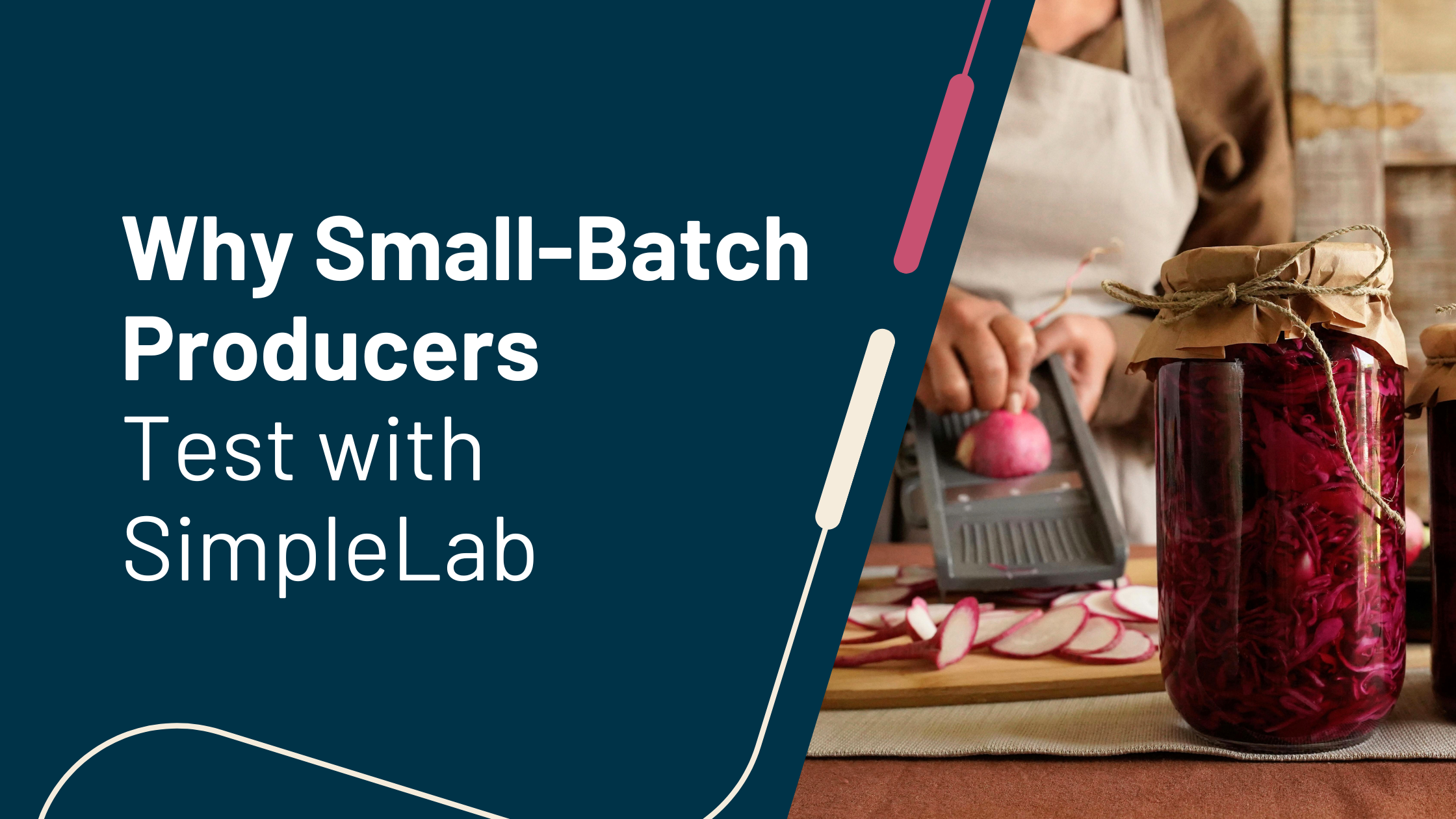
Small-batch or craft producers face the same safety, labeling, and quality expectations as large manufacturers, but often with fewer internal resources. Whether you're making sauces, soaps, or spirits, reliable lab data supports product integrity, regulatory readiness, and business growth.
SimpleLab helps cottage industries confirm product safety, support compliant labeling, and meet applicable requirements, batch by batch. From water quality and allergen controls to heavy metals and microbiology, our digital platform streamlines laboratory testing.
Below, we’ll explore how testing with SimpleLab works: Order test kits for the analytes you need. Ship with prepaid labels. Receive lab results digitally. Share with your buyers. Track everything in one secure account.
Table of Contents:
- Testing Solutions for Small-Scale Production
- Why Small-Batch Producers Choose SimpleLab
- The Bottom Line
Lab Testing for Small-Batch Food Producers
Food producers often need to confirm ingredient safety, validate labeling claims, or meet local and state cottage food requirements. Testing may support:
- Microbial safety verification
- Allergen control programs
- Heavy metals screening
- Pesticide residue testing
- Nutritional labeling data support
- Production water quality
Recommended Tests for Small-Scale Food Production
Whether preparing for inspection or expanding distribution, lab data supports confident decision-making. Here’s what we recommend:
Hardness Water Test
Hardness Water Test
$87
What it is:
Targeted laboratory testing for hardness in one drinking water sample. This test measures calcium and magnesium levels that contribute to mineral scaling and influence water chemistry.
Ideal for:
Food producers who use municipal or well water in cooking, processing, ingredient mixing, or cleaning and want to understand how mineral content may affect product consistency, flavor outcomes, or equipment performance. Hardness testing is especially valuable for producers using heated equipment, kettles, or steam systems where scale buildup can impact efficiency and long-term maintenance.
Coliform and HPC Water Test
Coliform and HPC Water Test
$143
What it is:
High-precision laboratory testing for the presence or absence of total coliform and E. coli bacteria, along with heterotrophic plate count (HPC), in one drinking water sample. This test evaluates microbial water quality and indicators of potential contamination.
Ideal for:
Food producers who rely on municipal, well, or spring water in food preparation, ingredient washing, equipment cleaning, or beverage production and want to verify microbial safety. This test is particularly important for operations using private water sources, preparing ready-to-eat products, or maintaining sanitation programs where water quality directly impacts food safety and regulatory compliance.
Common Tree Nut Allergen Food Swab Test
Common Tree Nut Allergen Food Swab Test
$627
What it is:
Targeted laboratory testing for six common tree nut allergens (almond, cashew, pistachio, hazelnut, pecan, and walnut) in one food, beverage, or surface swab sample. This test helps detect the presence of tree nut residues that may result from cross-contact during production.
Ideal for:
Small-scale food producers who manufacture products in shared kitchens, multi-use facilities, or mixed production environments and need to verify allergen control practices. This test is especially valuable for brands making allergen-free claims, operating under cottage food laws, or seeking to reduce cross-contact risk between nut-containing and nut-free products.
Heavy Metals Food Test - 4A
Heavy Metals Food Test - 4A
$252
What it is:
Specialized laboratory testing for the “Big 4” heavy metals (arsenic, cadmium, mercury, and lead) in one food sample. These metals can enter food products through soil, water, raw ingredients, or processing environments.
Ideal for:
Food producers who want to screen finished products or raw ingredients for heavy metal contamination, particularly when working with grains, spices, root vegetables, cacao, fruits, or other crops known to accumulate metals from soil. This test is valuable for brands focused on consumer safety, retail readiness, or meeting marketplace and distributor requirements for contaminant screening.
Metals and Minerals Food Test
Metals and Minerals Food Test
$382
What it is:
Specialized laboratory testing for a broad range of common metals and minerals in one solid food sample. This test measures both essential nutrients and trace elements that may occur naturally in ingredients or be introduced during processing.
Ideal for:
Small-scale food producers who want to better understand the mineral profile of their products for quality control, formulation insight, or nutrition labeling support. This test is particularly useful for brands producing health-focused foods, fortified products, or items marketed for their mineral content, as well as for those establishing baseline data on new recipes or ingredient sources.
Multi-residue Pesticides Food Test
Multi-residue Pesticides Food Test - 589A
$672
What it is:
Specialized laboratory testing for a broad array of pesticides, herbicides, and insecticides in one solid food sample. This test screens for residues that may remain on agricultural ingredients after cultivation and harvesting.
Ideal for:
Food producers who source fruits, vegetables, grains, herbs, or spices and want to verify the absence of residual agricultural chemicals in finished products. This test is particularly valuable for brands marketing natural or organic-style products, working with multiple suppliers, or preparing for retail distribution where contaminant screening may be required.
Vitamins and Minerals Food Test
Vitamins and Minerals Food Test
$758
What it is:
Specialized laboratory testing to measure the concentration of select vitamins and minerals in one food sample. This analysis helps quantify nutrient content for formulation validation or labeling purposes.
Ideal for:
Small-scale food producers who need verified nutrient data to support Nutrition Facts panels, validate fortification levels, or substantiate nutrient content claims. This test is especially useful for brands producing functional foods, fortified products, or health-focused formulations where accurate nutritional labeling supports regulatory compliance and consumer transparency.
Lab Testing for Small-Batch Personal Care and Cosmetic Brands
Cosmetic and personal care producers are responsible for ensuring products are safe and properly labeled. Testing can help confirm the absence of contaminants and support quality control programs.
Common testing needs include:
- Microbial contamination screening
- Aerobic plate count verification
- Heavy metals analysis
- Benzene screening
- Phthalates testing
- Microplastics screening
- Source water quality
Recommended Tests for Personal Care Brands:
Reliable data helps protect consumers and your brand. We recommend:
Coliform and HPC Water Test
Coliform and HPC Water Test
$143
What it is:
High-precision laboratory testing for the presence or absence of total coliform and E. coli bacteria, along with HPC, in one drinking water sample. This test evaluates microbial water quality and indicators of potential contamination.
Ideal for:
Small-batch personal care and cosmetic brands that use municipal, well, or spring water in product formulation and want to verify microbial quality before incorporating it into creams, cleansers, shampoos, or other water-based products. This test is especially important for brands using private water sources or seeking to strengthen quality control practices where water purity directly impacts product safety and shelf stability.
Metals Cosmetics Test
Metals Cosmetics Test
$543
What it is:
Targeted laboratory testing for an array of metals in one cosmetic or personal care product sample, including products such as sunscreen, hand sanitizer, deodorant, antiperspirant, shampoo, and other topical formulations. This test evaluates the presence of trace metals that may originate from raw ingredients, pigments, or manufacturing equipment.
Ideal for:
Cosmetic brands that want to screen finished products for heavy metal contamination, particularly when working with mineral-based ingredients, colorants, clays, or naturally sourced materials. This test supports product safety verification, retail readiness, and proactive quality control before broader distribution.
Microbiology Personal Care Product Test
Microbiology Personal Care Product Test
$147
What it is:
Laboratory testing for common pathogens and indicator organisms in one personal care or cosmetic product sample. This analysis evaluates microbial contamination that could impact product safety, stability, or shelf life.
Ideal for:
Small-batch personal care brands producing water-based or preservative-sensitive formulations who want to verify microbiological safety prior to sale or distribution. This test supports quality control programs, helps reduce contamination risk, and strengthens documentation for retailers, buyers or regulatory inquiries.
Aerobic Plate Count Cosmetics Test
Aerobic Plate Count Cosmetics Test
$89
What it is:
Targeted laboratory testing for aerobic plate count (APC) in one cosmetic or personal care product sample, such as sunscreen, hand sanitizer, deodorant, antiperspirant, shampoo, or other topical formulations. APC measures the total population of aerobic bacteria present in a product.
Ideal for:
Cosmetic brands that want to monitor overall microbial load as part of routine quality control, particularly for water-based or preservative-sensitive products. This test helps verify sanitation practices, assess product stability, and document microbial levels prior to retail distribution.
Benzene Cosmetics Test
Benzene Cosmetics Test
$259
What it is:
Targeted laboratory testing for benzene in one cosmetic or personal care product sample, including products such as sunscreen, hand sanitizer, deodorant, antiperspirant, shampoo, and other topical formulations. Benzene is a volatile organic compound that can be introduced through contaminated raw materials, propellants, or manufacturing processes.
Ideal for:
Small-batch cosmetic brands that want to proactively screen finished products for benzene contamination, particularly when using aerosolized ingredients, alcohol-based formulations, or complex supply chains. This test supports consumer safety verification, retailer requirements, and risk mitigation before broader market distribution.
Microplastics Personal Care Product Test - Liquid
Microplastics Personal Care Product Test - Liquid
$948
What it is:
Specialized laboratory screening for microplastics in one (1) liquid personal care or cosmetic product sample. Particles between 1 micron (μm) and 10 μm are reported as presence/absence, while particles 10 μm and larger are quantified.
Note: The smallest microplastic particles are often the most difficult to detect but are typically the most abundant. Analytical methods for microplastics are rapidly evolving, and comparisons between laboratories may vary.
Ideal for:
Small-batch personal care brands that want to evaluate liquid formulations—such as cleansers, shampoos, serums, or lotions, for microplastic content as part of ingredient transparency, sustainability initiatives, or retailer expectations. This test supports brands seeking greater insight into particulate contamination and emerging environmental concerns.
Phthalates Personal Care Products Test - Solid
Phthalates Personal Care Products Test - Solid
$480
What it is:
Specialized laboratory testing for an array of phthalates, synthetic chemicals commonly used as plasticizers, in one solid personal care or cosmetic product sample. Phthalates may be introduced through fragrances, packaging, or certain raw materials.
Ideal for:
Small-batch personal care brands producing solid formulations such as balms, sticks, bars, or pressed products who want to screen for phthalate contamination as part of ingredient transparency, clean beauty positioning, or retailer compliance requirements. This test supports proactive chemical screening and stronger quality assurance documentation prior to market distribution.
Lab Testing for Home Brewing and Small-Batch Alcohol Production
For brewers and small-scale alcohol producers, water chemistry, alcohol verification, and microbial stability directly impact product quality and compliance.
Testing commonly supports:
- Brewing water profile optimization
- Alcohol by volume (ABV) verification
- Spoiling bacteria and yeast detection
- Allergen screening (such as gluten)
- Nutritional or sweetener verification
Additional testing is available across multiple alcohol matrices: beer, wine, spirits, kombucha, and non-alcoholic beer.
Recommended Tests for Brewers & Craft Producers:
Basic Brewers Water Test
Basic Brewers Water Test - 9A
$163
What it is:
Specialized laboratory testing for a range of key water quality indicators that influence mash enzyme activity, mineral balance, flavor development, and brewing equipment condition in one drinking water sample. This test helps characterize the chemical profile of brewing water.
Ideal for:
Home brewers and small-batch alcohol producers who want to optimize mash performance, achieve consistent flavor profiles, and better control mineral balance in beer or spirits production. This test is particularly valuable when dialing in specific beer styles, adjusting water chemistry for recipe development, or evaluating how source water may affect long-term equipment performance.
Alcohol Content Spirits Test
Alcohol Content Spirits Test
$142
What it is:
Specialized laboratory testing to measure alcohol content (ABV) in one spirit sample. This analysis provides precise quantification of ethanol concentration in distilled products.
Ideal for:
Small-batch distillers and craft spirit producers who need accurate alcohol content data to support labeling, regulatory compliance, quality control, or consistency between batches. This test is especially important prior to retail distribution, tax reporting, or formula validation.
Basic Wine Test
Basic Wine Test - 7A
$202
What it is:
Specialized test for important markers to help assess stability, fermentation, preservation, acidity, and balance in one wine sample.
Ideal for:
Wineries seeking to monitor fermentation progress, verify stability prior to bottling, support quality control programs, and maintain consistency across vintages.
Spoiling Bacteria and Yeast Beer Test
Spoiling Bacteria and Yeast Beer Test
$328
What it is:
Specialized laboratory testing for spoilage organisms, including Lactobacillus species and wild yeast, in one beer sample. This analysis helps detect microbial contamination that can impact flavor, carbonation, clarity, and shelf stability.
Ideal for:
Home brewers and small-batch beer producers who want to verify microbial stability before packaging or distribution, investigate off-flavors or unexpected fermentation activity, or strengthen quality control between batches. This test supports product consistency and helps reduce the risk of spoilage-related losses.
Gluten Allergen Food Swab Test
Gluten Allergen Food Swab Test
$228
What it is:
Targeted laboratory testing for gluten (wheat) allergen in one food, beverage, or surface swab sample. This test helps detect the presence of gluten residues that may result from ingredients or cross-contact during production.
Ideal for:
Home brewers and small-batch alcohol producers creating gluten-free or gluten-reduced products need to verify allergen control practices or assess cross-contact risks in shared brewing environments. This test is especially valuable when using shared equipment, introducing new ingredients, or preparing products for gluten-free labeling or retail distribution.
Alcohol Content Beer Test
Alcohol Content Beer Test
$119
What it is:
Specialized laboratory testing to measure alcohol content (ABV) in one beer sample. This analysis provides precise quantification of ethanol concentration in finished beer.
Ideal for:
Home brewers and small-batch beer producers who need accurate ABV data to support labeling, regulatory compliance, recipe validation, or batch-to-batch consistency. This test is particularly useful prior to packaging, distribution, or submitting products to retailers or competitions where verified alcohol content is required.
Alcohol Content Non-alcoholic Beer Test
Alcohol Content Non-alcoholic Beer Test
$142
What it is:
Specialized laboratory testing to measure alcohol content in one non-alcoholic beer sample. This analysis provides precise quantification of residual ethanol levels to verify compliance with non-alcoholic labeling thresholds.
Ideal for:
Small-batch brewers producing non-alcoholic or low-alcohol beer who need to confirm that finished products meet regulatory definitions and labeling standards. This test supports quality control after dealcoholization or controlled fermentation processes and helps document compliance prior to retail distribution.
Regulatory Notes
Regulation of small-batch and craft alcohol products is typically managed at the state level and may differ from federal FDA or USDA frameworks. Requirements vary by state but often include restrictions on selling products across state lines and limits on total annual production volume.
Not all states impose the same rules, and some may require specific testing, licensing, or documentation prior to sale. It is important for home brewers and small-scale alcohol producers to review their state’s alcohol control authority guidelines to understand applicable testing, labeling, and permitting requirements before distributing products.

Why Small-Batch Producers Choose SimpleLab
You don’t need to manage multiple lab relationships. You need accurate, defensible results and a system that works as your business grows.
SimpleLab provides:
- Access to certified partner laboratories
- Order-as-needed flexibility
- Free shipping, both ways
- Clear, digital lab reports
- Centralized batch tracking
- Secure sharing with inspectors, retailers, or partners
From farmers’ markets to retail distribution, SimpleLab simplifies testing logistics so you can focus on production, quality, and growth. Our end-to-end platform offers advanced tools, preferred pricing, and a seamless way to manage testing at scale for over one hundred industries.

The Bottom Line
Small-batch producers face real safety and labeling responsibilities, regardless of company size. Whether you’re crafting specialty foods, handmade skincare, or small-run alcohol, lab testing helps confirm safety, support compliance, and protect your brand reputation.
SimpleLab delivers certified lab testing, streamlined logistics, and centralized digital reporting, without the overhead of building your own lab infrastructure.
Sam brings expertise in water chemistry and environmental engineering to support scientific standards at SimpleLab. She earned Bachelor’s and Master’s degrees in Environmental Engineering and has experience in environmental analytical chemistry research.
About SimpleLab
SimpleLab combines world-class laboratory science with customer service to ensure testing your environment is simple, fast and factual. Everything we do is driven by data and supported by a team of experts ready to answer your questions.