When and How to Test Mold: Why Visible Mold Isn’t the Whole Story
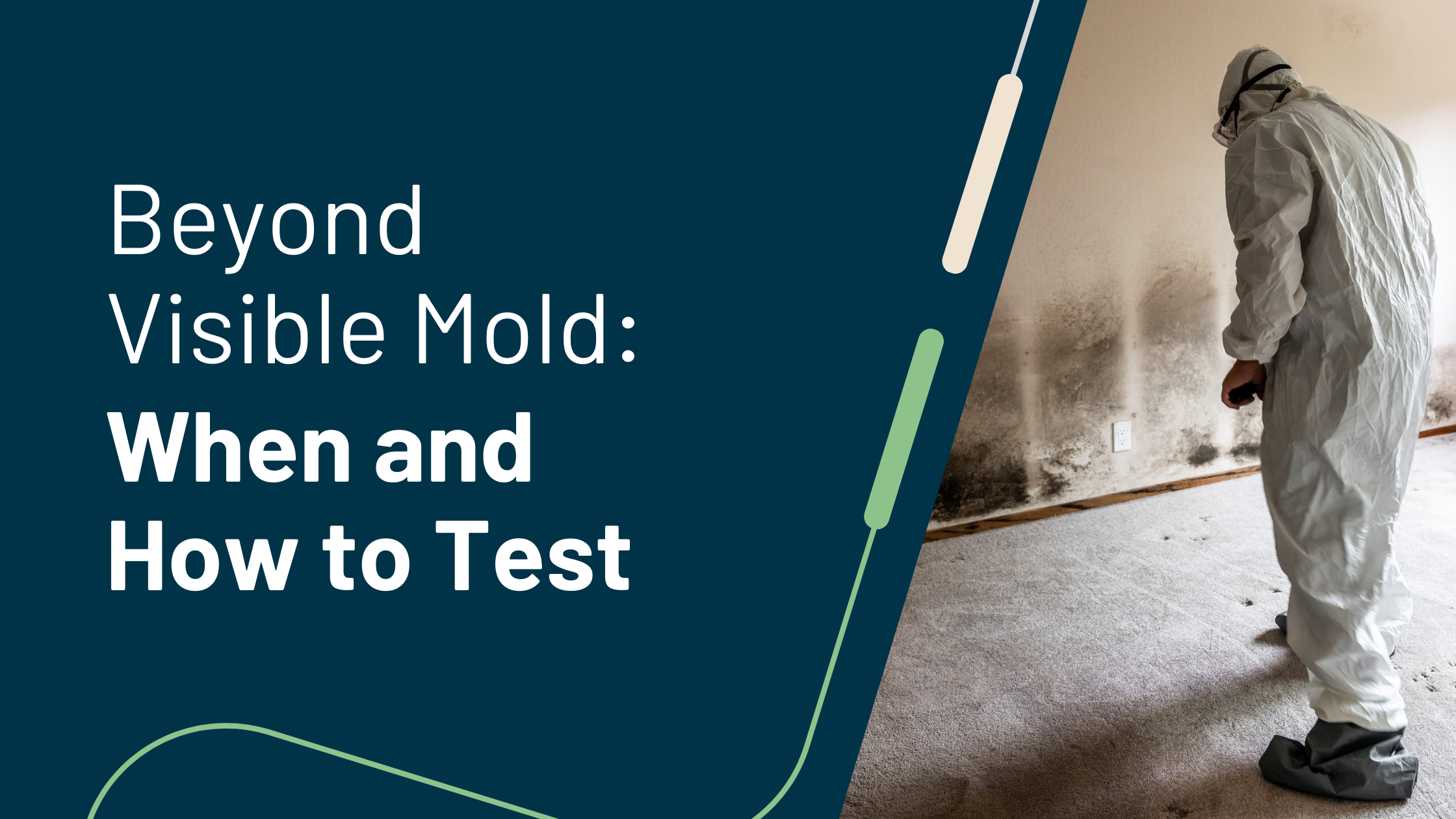
If you can see mold, there’s already a problem. But if you can’t see mold, that doesn’t necessarily mean there isn’t one. Mold issues are often more complex than a dark patch on drywall. Spores are microscopic. Growth can occur behind walls, under flooring, inside HVAC systems, or within insulation.
When mold is suspected, laboratory testing provides data about what’s present — on surfaces and in the air. The following guide will explore when and how to test for mold as well as why it matters.
Table of Contents:
- Visible Mold vs. Airborne Spores: What’s the Difference?
- Hidden Growth: Where Mold Often Lives
- Health Implications of Mold: Why It Matters
- When Should You Test for Mold?
- Top Recommended Test Kits for Mold
- What Mold Test Results Actually Tell You
- Swab vs. Tape vs. Vacuum Testing: What’s the Difference?
- Mold Is a Moisture Problem First
- The Bottom Line
Visible Mold vs. Airborne Spores: What’s the Difference?
When mold is visible on a surface, the stain on the wall may only represent a small portion of what’s present in the indoor environment. Mold organisms release microscopic spores into the air as part of their natural life cycle. These spores:
- Travel through airflow systems
- Settle on surfaces
- Remain suspended indoors
- Persist even after visible growth is disturbed or removed
Even after remediation, elevated airborne spores can remain if the source wasn’t fully addressed.
Hidden Growth: Where Mold Often Lives
Mold requires three things:
- Moisture
- Organic material (wood, drywall, dust, insulation)
- Time
Common hidden growth areas include:
- Behind drywall after plumbing leaks
- Beneath flooring following flooding
- Inside HVAC ducts and air handlers
- Under sinks and cabinets
- In attic insulation
- Within crawlspaces
Because mold grows in concealed cavities, visible inspection alone rarely tells the full story.
Health Implications: Why It Matters
Mold exposure affects individuals differently depending on genus, concentration, exposure duration, and personal sensitivity.
Potential health impacts may include:
- Respiratory irritation
- Worsening asthma symptoms
- Allergic reactions
- Sinus congestion
- Skin or eye irritation
- Headaches or fatigue in sensitive individuals
Certain populations, including children, the elderly, immunocompromised individuals, and those with asthma, may be more susceptible to the health impacts of mold exposure.
Importantly, symptoms often correlate more strongly with airborne spore levels than with visible staining alone.
When Should You Test for Mold?
Testing for mold is most useful when you need clarity for decision-making. Consider testing for mold when:
- There is a history of water intrusion
- You detect a persistent musty odor
- Occupants report unexplained respiratory symptoms
- Mold remediation has already occurred and clearance confirmation is needed
- You’re involved in a property transaction or liability dispute
- Visible mold is present but scope is unclear
Testing is generally not necessary when there is obvious, active mold growth that clearly requires removal. In those cases, identifying and addressing the source of moisture is the first step.
Renovating an Old Home? Here's What to Test
Top SimpleLab Kits for Mold Testing
SimpleLab currently offers surface and dust-based mold testing. Air sampling is one method used in indoor air quality investigations, but SimpleLab does not currently offer these types of tests.
The surface and dust-based methods SimpleLab offers help confirm visible mold and assess overall mold presence within a space. The following kits are designed to provide clarity and support informed next steps:
Mold Dust Surface Test
Mold Dust Surface Test
$400
What it is:
Specialized laboratory analysis of a settled dust vacuum sample, testing for 36 common types of mold, fungi, and mildew.
Why this test:
Dust collects mold spores over time, making this test useful for evaluating broader mold presence within a room or property, especially when mold is suspected but not clearly visible.
Requires access to a vacuum with hose attachment.
Mold and Fungus Surface Tape Test
Mold and Fungus Surface Tape Test
$61
What it is:
Microscopic analysis of fungal spores and structures collected using a tape-lift sample from a visible surface.
Why this test:
Ideal for confirming whether visible discoloration is mold and identifying the types present. Best for flat, smooth surfaces such as drywall, wood trim, or ceilings.
Need to test irregular or textured surfaces? Consider the Mold and Fungus Surface Swab Test:
Mold and Fungus Surface Swab Test
Mold and Fungus Surface Swab Test
$61
What it is:
Laboratory analysis of fungal spores collected using a sterile swab sample.
Why this test:
Designed for irregular, porous, or textured surfaces where tape lifts may not adhere well, such as HVAC components, rough wood, or tight crevices.
Mold and Fungus Bulk Materials Test
Mold and Fungus Bulk Materials Test
$61
What it is:
Targeted testing of a physical material sample (e.g., drywall, insulation, carpet) to identify fungal spores and structures and determine relative concentration within the material.
Why this test:
Appropriate when materials are being removed during remediation or when deeper contamination within building materials is suspected.
SimpleLab Guide to Mold Test Kits: Choose the Right Test for Your Scenario
What Mold Test Results Tell You
It’s important to understand what lab results mean, and what they can and can’t tell you.
Mold testing can:
- Identify mold genus (e.g., Aspergillus, Penicillium, Cladosporium, Stachybotrys), in certain cases, species
- Quantify airborne spore counts (for air samples)
- Confirm presence of mold on a surface
- Compare indoor vs. outdoor spore levels (for air samples)
- Support remediation or insurance documentation
Mold testing cannot:
- Diagnose health conditions
- Determine exact source location without additional inspection
- Confirm toxicity (most tests identify genus, not toxin production)
- Predict future growth without moisture control
Elevated indoor counts, particularly when indoor levels exceed outdoor levels or when water-damage-associated genera are detected, often indicate an active or recent moisture issue.
Interpreting results requires context: building history, occupant symptoms, and environmental conditions all matter.
Swab vs. Tape vs. Vacuum Testing: What’s the Difference?
Different tests answer different questions.
Swab Testing (Surface Sampling)
Used to:
- Confirm whether a suspicious material is mold
- Identify the genus of mold on a surface
- Test small or irregular areas
Best for:
- Wet surfaces
- Discolored materials
- HVAC components
- Hard-to-access crevices
Limitations:
- Does not measure airborne exposure
- Only reflects the sampled location
Tape Lift Testing (Surface Sampling)
Used to:
- Capture visible growth directly from a surface
- Identify mold type and spore structures
- Preserve structure for microscopic analysis
Best for:
- Dry surfaces
- Visible patches on drywall, wood, trim
- Situations where preserving spore structure matters
Limitations:
- Only evaluates what is physically present on that surface
Dust (Vacuum) Testing
Used to:
- Evaluate mold spores that have settled into dust over time
- Assess overall mold presence within a room or property
- Detect mold concerns when visible growth is not obvious
Best for:
- Musty odors without visible mold
- Concerns about hidden mold
- Evaluating longer-term mold presence in a space
Limitations:
- Does not identify the exact location of mold growth
- Requires access to a vacuum with hose attachment
Dust testing can provide a broader view of mold presence because dust naturally collects spores circulating in the indoor environment over time.
Mold Is a Moisture Problem First
Testing is a tool, not a solution. If mold is detected, the underlying moisture source must be corrected. Sources of moisture that can lead to mold issues include:
- Plumbing leaks repaired
- Roof or window intrusion sealed
- Humidity controlled
- Wet materials properly dried or removed
Remember: Without moisture control, mold will return.
The Bottom Line
- Visible mold is only part of the picture. Airborne spores, hidden growth, and residual contamination often extend beyond what you can see.
- Strategic testing, of surfaces or the air, provides clarity when decisions need to be made about health, liability, remediation, or property conditions.
- Understanding the limitations and strengths of each testing method ensures you’re using data appropriately, not just reacting to stains on a wall.
Why SimpleLab?
If you’re evaluating mold concerns in a residential or commercial environment, SimpleLab makes it easy to choose the right test and move forward with confidence. Order sampling kits, collect samples using clear instructions, and receive digital lab results that can be securely shared with clients, tenants, insurers, or remediation professionals. SimpleLab coordinates accredited lab testing through one streamlined platform.
Testing With SimpleLab Is Easy!
And if you’re unsure which sampling method is appropriate for your situation, the SimpleLab support team is available to help you determine the right testing approach before you order, so you can make informed decisions from the start.

Sam brings expertise in water chemistry and environmental engineering to support scientific standards at SimpleLab. She earned Bachelor’s and Master’s degrees in Environmental Engineering and has experience in environmental analytical chemistry research.
About SimpleLab
SimpleLab combines world-class laboratory science with customer service to ensure testing your environment is simple, fast and factual. Everything we do is driven by data and supported by a team of experts ready to answer your questions.