SimpleLab Guide to Soil Testing
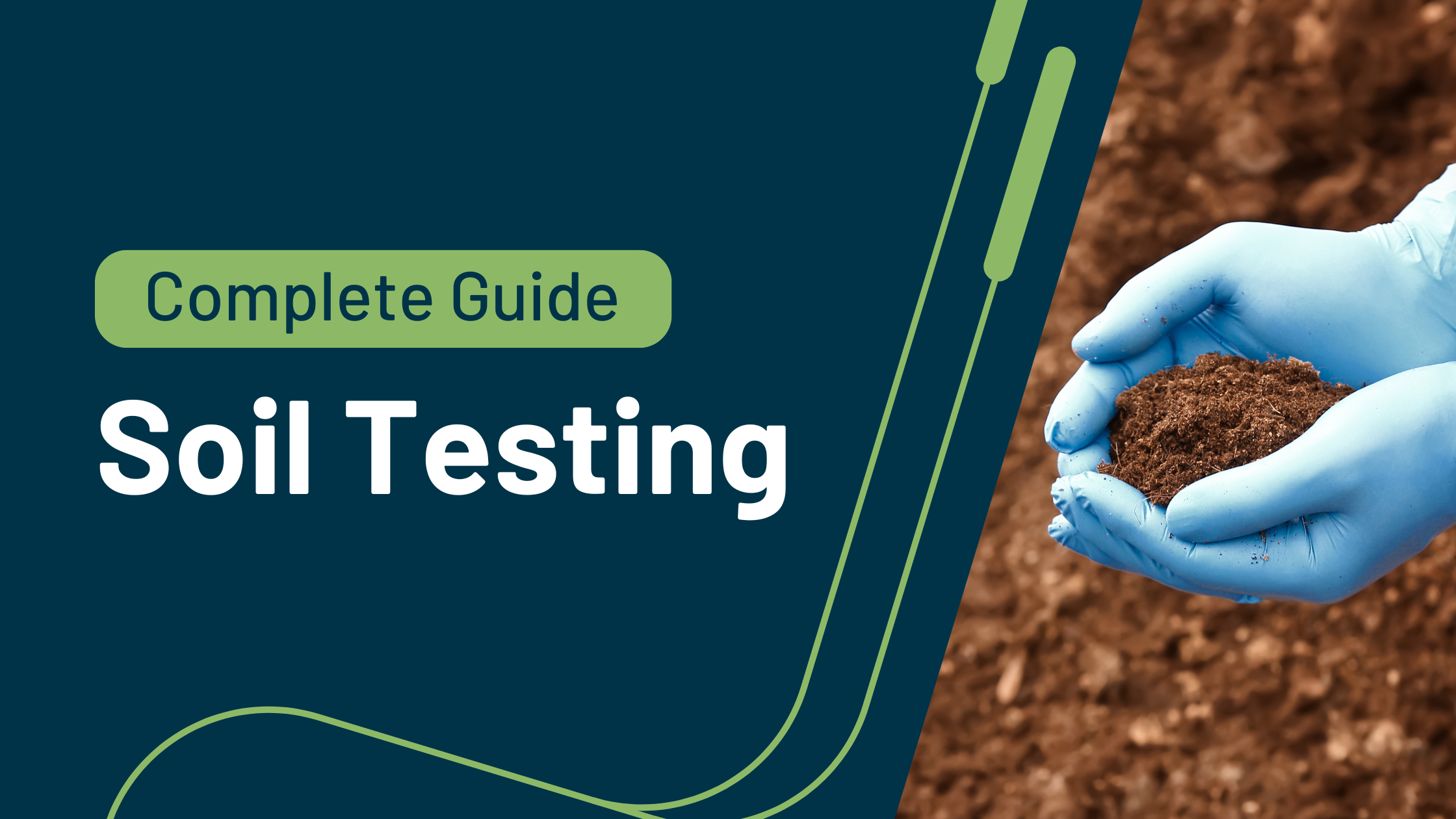
Soil testing is an essential tool for understanding the nutrient composition, safety, and overall health of your soil. Though the importance of soil is often overlooked, it plays a crucial role in supporting ecosystems, agriculture, and human health.
This testing guide explores the ins-and-outs of soil, including what soil is, why testing soil matters, and what to test for in soil. You’ll learn:
- What Soil Is Made Of
- Soil Testing: When & How often
- Soil Testing with a Lab: How to Sample
- Key Takeaways
What Is Soil Made of?
Far more than just dirt, soil is a complex mixture essential for plant growth and environmental balance. Soils are composed of a blend of organic matter, minerals, water, gases, and a diverse community of microorganisms and macroorganisms, including bacteria, fungi, insects, and worms.
The specific proportions of these components vary significantly between different soils due to factors such as climate, geology, vegetation, and land use history. These variations influence essential soil properties like texture, structure, porosity, toxicity, and nutrient availability, affecting soil fertility and overall plant health.
Soil Health Indicators
Important indicators for assessing soil health include:
- Primary nutrient concentrations, particularly nitrogen (N), phosphorus (P), and potassium (K) — collectively referred to as NPK
- Secondary nutrients like calcium (Ca), magnesium (Mg), and sulfur (S)
Other critical measures include:
- Organic matter content
- Soil pH
- Cation exchange capacity (CEC)
- Electrical conductivity (EC)
- Microbial activity
- Presence of potential contaminants, including heavy metals and pesticide/herbicide residues
Primary Nutrients
Essential for leaf and stem growth and chlorophyll production (N), root growth, seed formation, and photosynthesis (P), and water regulation and stress resistance (K).
Secondary Nutrients
Support the structure of plants through cell wall formation and nutrient uptake (Ca), photosynthesis and root growth (Mg), and protein production and photosynthesis (S).
Micronutrients
Play a wide variety of roles related to plant growth and development, photosynthesis, and disease resistance.
Organic Matter
Improves soil structure, water retention, and nutrient availability while supporting beneficial microbial life.
pH
Affects nutrient solubility and microbial activity — most plants thrive in soil with a pH of 6-7.5 [1].
Cation Exchange Capacity (CEC)
This measures the soil's ability to retain and exchange positively charged ions (nutrients), influencing fertility.
Electrical Conductivity (EC)
Indicates concentration of soluble salts, which affect water uptake and potential stress from too much salt.
Microbial Activity
High microbial activity reflects a biologically active soil that enhances nutrient cycling, disease suppression, and organic matter breakdown.
Heavy Metals
Excessive heavy metals can be toxic to plants and to people consuming the plants as a result of bioaccumulation.
Pesticide/Herbicide Residues
Residual chemicals can disrupt soil biology and harm sensitive plants or non-target organisms.
Why Test Soil?
Soil testing reveals key information about nutrient levels, pH, and potential contaminants, enabling informed decisions about fertilization, irrigation, construction, or remediation. Whether you’re growing food, building or buying a home, studying ecosystems, or protecting public health, soil testing is a vital tool.
By understanding what is in your soil, you can improve plant health, prevent overfertilization and pollution, ensure the safety of your environment, and promote long-term sustainability.

When to Test
Deciding when to test your soil depends on a variety of factors. There are two main reasons to test soil:
- Assessing contamination
- Evaluating overall soil health
How Often to Test
You should test your soil at least once to determine soil type and get a handle on your soil health index. Consider re-testing depending on results and actions taken.
You can also test before or after remediation efforts to confirm effectiveness of remediation.
If you’re located near potential contamination zones, we recommend testing more frequently.
Who Should Test
- Homeowners (especially in urban or industrial areas, or with septic systems)
- Environmental consultants
- Property developers
- Home inspectors
- Regulatory agencies
- Schools (testing their playground areas)
- Researchers studying soil exposure risks
What to Test for in Soil
Deciding what to test for in your soil depends on several factors, with the most important being your reason for testing and the intended use of the land.
Contamination
If you are testing for potential contamination, it is important to consider the site's history and nearby land uses. Common contaminants to test for include:
- Heavy metals: Such as lead, mercury, arsenic, and cadmium, particularly on older properties or near former industrial sites.
- Volatile Organic Compounds (VOCs): Especially near gas stations, dry cleaners, or industrial operations.
- Petroleum Hydrocarbons: Often found near areas with automotive activities, gas stations, or oil and gas storage tanks.
- Pesticide/Herbicide Residues: Common in areas with a history of agricultural use or intensive lawn care.
Additionally, if a specific contamination event has occurred in your area, it is important to test for the particular contaminants associated with that event.
SimpleLab's Heavy Metal Soil Testing Kit:
Heavy Metals Soil Test
$183
For pesticide in soil analysis, SimpleLab offers a Pesticide and Herbicide Test Kit:
Pesticides and Herbicides Soil Test - 32A
$396
Your basic soil test will assess your sample for primary macronutrients and key soil health and quality indicators. SimpleLab's Essential Soil Test:
Essential Soil Test - 5A
$180
Soil Fertility
If you are testing to assess the health and fertility of your soil, what you test for will depend largely on the scale of your growing operation and how critical soil performance is to your goals.

Home gardeners and hobbyists will benefit from a basic soil test, like SimpleLab's Essential Soil Test, that includes:
- pH
- Primary nutrients (NPK)
- Secondary nutrients (Ca, Mg)
- Organic matter %
Note: If you are growing vegetables, we highly recommended that your garden soil analysis include lead (Pb) as well.
For larger-scale agricultural operations or home gardeners seeking a deeper understanding of their soil health, additional testing should include:
- Sulfur
- Micronutrients: Iron, zinc, manganese, copper, boron, molybdenum, and others
- Cation exchange capacity (CEC)
- Electrical conductivity (EC)
- Pesticide/herbicide residues
Testing for heavy metals (such as lead, arsenic, cadmium, and mercury) should also be considered if you suspect contamination or if the site is near industrial areas, major roads, or older construction. Consider SimpleLab's Advanced Soil Test 16A:
Advanced Soil Test - 16A
$334
DIY At-home Tests vs. Laboratory Testing
Sometimes, soil test costs can be appear prohibitive. While DIY soil testing kits that yield results at home offer a quick and inexpensive snapshot of basic soil conditions, laboratory testing is a far more worthwhile investment, providing far greater accuracy, sensitivity, and breadth of information.
Laboratories use standardized, calibrated methods and specialized equipment to precisely measure soil composition, detecting nutrient and contaminant concentrations far below the sensitivity of kits that give results at home. Professional labs also prepare samples by removing debris, grinding, and sieving, improving the reliability of results.
In contrast, DIY results at home soil tests often involve mixing the soil sample with water, leaving debris in the sample and increasing the risk of skewed outcomes.
Additionally, laboratories ensure that reagents are within their effective shelf life, whereas the chemicals in at home test kits may degrade over time, reducing reliability.
Finally, results at home test kits typically assess soil pH and the primary macronutrients — NPK — and report results in broad categories such as "acidic," "neutral," or "alkaline" for pH, and "deficient," "adequate," or "sufficient" for nutrients. Laboratory analyses, on the other hand, provide precise numerical values in standard units, supporting more informed and tailored soil management decisions.

Laboratory Soil Testing
How to Collect a Soil Sample for Lab Analysis
If you have decided to test your soil through a laboratory, following correct sampling procedures is critical to ensure the results are accurate and representative of the area being evaluated.
Note: Improper collection and handling can introduce contamination, degrade sample integrity, and skew laboratory analyses.
Here are some general guidelines for how to collect and handle soil samples:
- Use Clean Equipment: Always use clean, non-corrosive tools (e.g., stainless steel or plastic) to prevent cross-contamination. Avoid galvanized, brass, or painted tools.
- Wear Clean Gloves: Wear a new pair of non-powdered, disposable gloves.
- Clear Surface Debris: Remove plant residues, mulch, rocks, and organic litter from the sampling area before digging.
While laboratory soil testing kits will typically include a clean container to hold your sample, you may need to purchase additional supplies, such as shovels and gloves, separately.
More specific sampling strategies will depend on your reason for testing your soil, with approaches differing greatly for soil contamination testing versus soil health testing.
For contamination testing, samples are often collected from multiple targeted locations where contamination is suspected. Depending on your goals, you may take samples at different depths to assess how far contamination has spread—from surface-level to evaluate potential contact exposure risk, to deeper layers where contaminants might affect plant roots or leach toward groundwater.
For soil health testing, samples are usually collected at a consistent depth (commonly 6–8 inches) from several locations within a planting area and combined into one composite sample to get a representative picture of soil conditions. In some cases, it may be helpful to compare samples from both healthy and unhealthy plants, or to repeat sampling over time to monitor changes in soil health.
How Long Do Soil Tests Take?
Standard nutrient and pH tests and tests for heavy metals, pesticides, or hydrocarbons are typically completed within 10 days. Tests for other contaminants such as radiologicals or certain organic contaminants such as dioxins and furans, may take anywhere from 15-30 days.
The precise turnaround time for laboratory soil testing varies depending on the type and complexity of analyses requested.
How to Read a Laboratory Soil Test
Results from your soil test will typically contain information about your sample, including the date the sample was analyzed, the laboratory that performed the testing, and the parameters evaluated. Customer-provided information, such as sampling location or notes, may also be included.
The parameters, or properties, nutrients and contaminants, measured in the soil will be listed. Parameters can include:
- Physical properties like pH or electrical conductivity
- Nutrient concentrations such as nitrogen, phosphorus, or potassium
- Contaminant levels such as heavy metals (e.g., lead, cadmium) or organic pollutants (e.g., pesticides)
Each parameter tested will be reported along with:
- Result: The measured concentration or level, typically reported in milligrams per kilogram (mg/kg) for soil nutrient and contaminant tests.
- Detection Status: If the parameter is below the method detection limit, it will be listed as “Not Detected.”
- Analytical Method: The standard method used for analysis (e.g., EPA 680 for pesticides and PCBs, EPA 7471A for mercury).
- MDL (Method Detection Limit): The lowest concentration the method can reliably detect.
- RL (Reporting Limit): The lowest concentration that can be reliably quantified and reported by the laboratory.
- Analysis Date: The date when the laboratory completed the analysis.
The ideal results for the various soil parameters can vary depending on the specific plants or crops you are growing. However, there are generally ideal ranges that support healthy growth for most types of plants: [12-16]

*N is measured as NO₃⁻-N because NO₃⁻ is the most plant-available form of N. Organic matter also contributes to overall N content as it decays.
**Base saturation measures the percentage of a soil's cation exchange capacity (CEC) that is occupied by basic cations. Many nutrients, including calcium, magnesium, and potassium, are basic cations.
While these idealized nutrient ranges are a good starting point, nutrient ratios — especially the nitrogen, phosphorus, and potassium ratio, or NPK ratio — also offer insight into whether your soil’s nutrient balance supports the needs of plants. The ideal NPK ratio varies depending on what you're growing.
To calculate the NPK ratio of your soil, simply divide each nutrient’s concentration by the smallest of the three, then round to whole numbers. For example, if N = 30 mg/kg, P = 15 mg/kg, and K = 60 mg/kg, the ratio is 2:1:4. Other notable nutrient ratios, such as calcium and magnesium, or nitrogen and sulfur, can be calculated the same way.
Your report may also include additional contextual information about the contaminants and nutrients detected, such as their common sources in the environment and potential health effects associated with their presence in soil.
Key Takeaways
- Soil health depends on many factors, including nutrient balance, pH, organic matter content, and contaminant concentrations.
- Soil testing provides critical information to help support healthy environments for plants and people.
- Laboratory soil testing is far more accurate and comprehensive than kits that provide results at home.
- Proper sampling technique is crucial to ensure soil test results are accurate, reliable, and representative of the area tested.
Jess leads the scientific program at SimpleLab and oversees all analytical and data products. She holds a PhD in water resources and a Master’s in Environmental Engineering from UC Berkeley.
About SimpleLab
SimpleLab combines world-class laboratory science with customer service to ensure testing your environment is simple, fast and factual. Everything we do is driven by data and supported by a team of experts ready to answer your questions.