SimpleLab Guide to Dust Testing
Despite its innocuous appearance, dust can harbor hazardous contaminants. As a result, dust testing can be a powerful means for understanding exposure risks. Over 500 compounds have been reported in indoor dust — and the real number of exposures is likely much larger.[1] Because people spend 95% of their time indoors, dust can significantly impact human health when it is mobilized in the air and inhaled.
This SimpleLab guide emphasizes why testing dust matters, when to test it, and what to test for.
Table of Contents:
- What Is Dust?
- Why Is Lab Testing Dust Important?
- When Should You Test Dust?
- Testing for Lead Dust
- Testing for Asbestos Dust
- Testing for Mold in Dust
- Testing for Allergens in Dust
- Key Takeaways
What Is Dust?
Dust is a diverse mixture of microscopic particles originating from both human-made and natural sources. Ranging from small fibers to particulate matter, dust can potentially carry toxic contaminants. It is present indoors (as residential dust) and outdoors (as environmental dust — although environmental dust is often not separable from soil, and outdoor soil tracked into the home contributes to approximately 35% of indoor dust).[2]

Why Test Dust?
Residential dust testing helps people identify the potential health risks of dust within the home. Environmental dust testing helps evaluate pollution problems and the impacts of industrial or construction activities on environmental quality.[3]
Environmental dust can come from:
- Industrial sources
- Mobile emissions from vehicles
- Construction debris
- Soil
- Pollen
Residential dust is typically composed of environmental dust plus:
- Human skin cells
- Pet dander
- Cooking residues
- Particles from household furniture, carpets, and personal care and/or cleaning products
Dust ranges in particle size, but most dust particles are between 30-300 microns [1], or from about the size of a white blood cell to the width of a few strands of thick human hair.
Only 5% of contaminants in dust have been properly identified by scientists, which means that the vast majority of dust contaminants are unknown.[4] The field of dust testing and analysis is rapidly developing as the scientific community discovers new contaminant risks.
Why Is Testing Dust in a Laboratory Important?
Laboratory dust testing is critical to ensure accuracy and precision, something DIY kits cannot provide. Lab testing quantifies contamination at trace levels that may be impactful to human or environmental health.

With such a wide array of dust sources comes a long list of potential contaminant issues. While not exhaustive, common contaminants in dust include:
- Heavy metals (Lead, copper, zinc, arsenic, cadmium, mercury)
- Bacterial agents (Bacteria, mold, yeast, and fungi spores)
- Industrial compounds/particulates (Asbestos, silica, PCBs, chlorinated paraffins)
- Biologically-derived material (Allergens, including dust mites and pet dander, pollen, skin)
- Chemicals in personal care products (Parabens, synthetic fragrances, triclosan)
- Plastic additives (Flame retardants, organophosphate esters, phthalate esters)
- Chemicals in household products (Pesticides, paint residues, cleaning agents)
- PFAS compounds (PFOA, PFOS)
- Combustion byproducts (Polycyclic aromatic hydrocarbons)
- Polymer components (Bisphenols, alkylphenols)
- Microplastics
When Should You Test Dust?
The cases where dust testing is always recommended include:
- Post-Renovation: Activities like sanding or demolition can aerosolize asbestos fibers and lead particles, necessitating immediate testing.
- Following Water Intrusion: Persistent dampness or flooding can create ideal conditions for mold proliferation, making mold testing and remediation critical.
- Occupying Older Homes: Homes constructed before 1978 are more likely to contain lead-based paint and asbestos-containing materials, especially in imported products.
- Occupying Urban Homes: Pest and rodent infestations are frequent in urban areas and may be the underlying cause of allergens in the home.
- Living with Pets: Pet dander is a common dust component that can cause respiratory issues.
- Proximity to Industrial Areas: Homes near factories or high-traffic areas may experience elevated dust contamination from heavy metals and particulates.
- Proximity to Agricultural Areas: Homes near agricultural areas, golf courses, or other areas with high concentrations of pesticides and agricultural chemicals.
- Unexplained Health Symptoms: Recurrent respiratory issues or allergies may indicate dust contamination.
Comprehensive dust testing can be complex and expensive. For the most part, when and what to test for in dust — for residences and industrial locations — remains largely unique to each situation.

What to Test for in Dust
Some common and hazardous types of residential dust contaminants are:
- Lead
- Asbestos
- Mold
- Allergens
Below we summarize when and how to get dust tested for each of these contaminants.
Test for Lead Dust
Lead is one of the most common — and toxic — heavy metals found in residential dust. You should test for lead dust in residences if you:
- Live in an old home
- Reside near heavy industry
- Have young children or are pregnant
- Before and after you do any personal remodeling projects involving painting or removing building materials
Children and pregnant women are the most susceptible to lead toxicity, so testing for lead dust is essential if you have a family. Lead dust is a higher risk in homes built before 1978 because lead-based paint was commonly used as indoor and outdoor paint.
Sources of Lead Dust
- Peeling or chipped paint
- Remodeling projects undertaken in an older home, especially if sanding is involved
- Removing building material (e.g. popcorn ceiling, carpeted areas, baseboards, etc.)
Because a high fraction of indoor dust is composed of outdoor soil, external sources of lead play a meaningful role in residential lead dust concentrations. Soil near older homes also commonly harbors old lead paint dust. Lead particulates may also settle on nearby soil or stay mobilized in the air from nearby industrial activities—all of which could be tracked to indoor dust.
How to Test for Lead Dust at Home
Testing for lead dust can be performed using “do-it-yourself” (DIY) swabs purchased at big box home improvement stores or using a lead dust test kit to mail surface wipes to an analytical laboratory. In both DIY and analytical lab testing, the person sampling uses a swab or surface wipe on a specific area on a surface in the home to capture contaminants in “settled dust”.
DIY swab tests provide a qualitative measure of the presence or absence of lead which can be useful in a pinch at a low cost. However, DIY swab tests are inferior to lab tests because of:
- Low accuracy (they are prone to false positives and negatives)
- High detection limits hinder detection of trace levels
- Poor performance on irregular surfaces
- Lack of precision and reliability when compared to lab testing
Analytical lab testing for dust ensures high accuracy, low-concentration detections, and quality control and assurance. Standard methods like SW-846 Test Method 7000B ensure that results are analytically reliable. Consider SimpleLab's Lead Dust Surface Wipe test:
Lead Dust Surface Wipe Test
$61
Test for Asbestos Dust
Asbestos is a class of six naturally occurring minerals that are incredibly resistant to heat and corrosion. Homes built before 1977 may have asbestos in pipes, insulation and other construction materials. You should test for asbestos in residential dust if you:
- Live in an old home
- Begin a renovation that exposes pipes, insulation, or other home materials like vinyl flooring or soundproofing
- Experience seismic disturbances that might crack or expose asbestos
- Engage in any personal remodeling projects where you are removing building material (ceramic tiles, mastic (adhesives), popcorn ceiling, baseboards, etc.).
Long-term asbestos exposure can cause scarring in the lungs (asbestosis) when inhaled as dust particles. Many products in global production still contain asbestos, but the EPA has passed landmark regulations to protect consumers from asbestos in current and imported products [5,6,7]. The highest risk factor for exposure is from legacy asbestos and for imported products that may still—despite regulations—contain asbestos.
Products with a Risk of Asbestos Include:
- Car clutch pads and brake linings
- Construction cement, putties and plaster
- Insulation and pipe wrapping
- Siding and roof shingles
- Casings for electrical wires
- Millboard
- Patching and joint compound
- Floor tile (especially 9” x 9” vinyl tiles) and adhesives
- Soundproofing material (popcorn ceiling)
Testing for Asbestos in Dust
Proper sampling and testing for asbestos requires analytical lab testing. There is no reliable DIY home test kit for asbestos in dust.
While asbestos can be analyzed within a suspected material (e.g. sending in a sample of flooring), asbestos in settled dust is collected via a surface wipe or a vacuum sampler. Standard methods like ASTM D6480 or ASTM D5755 ensure that results are analytically accurate. Consider SimpleLab's Asbestos Surface Wipe test:
Asbestos Surface Wipe Test
$327
Test for Mold Dust
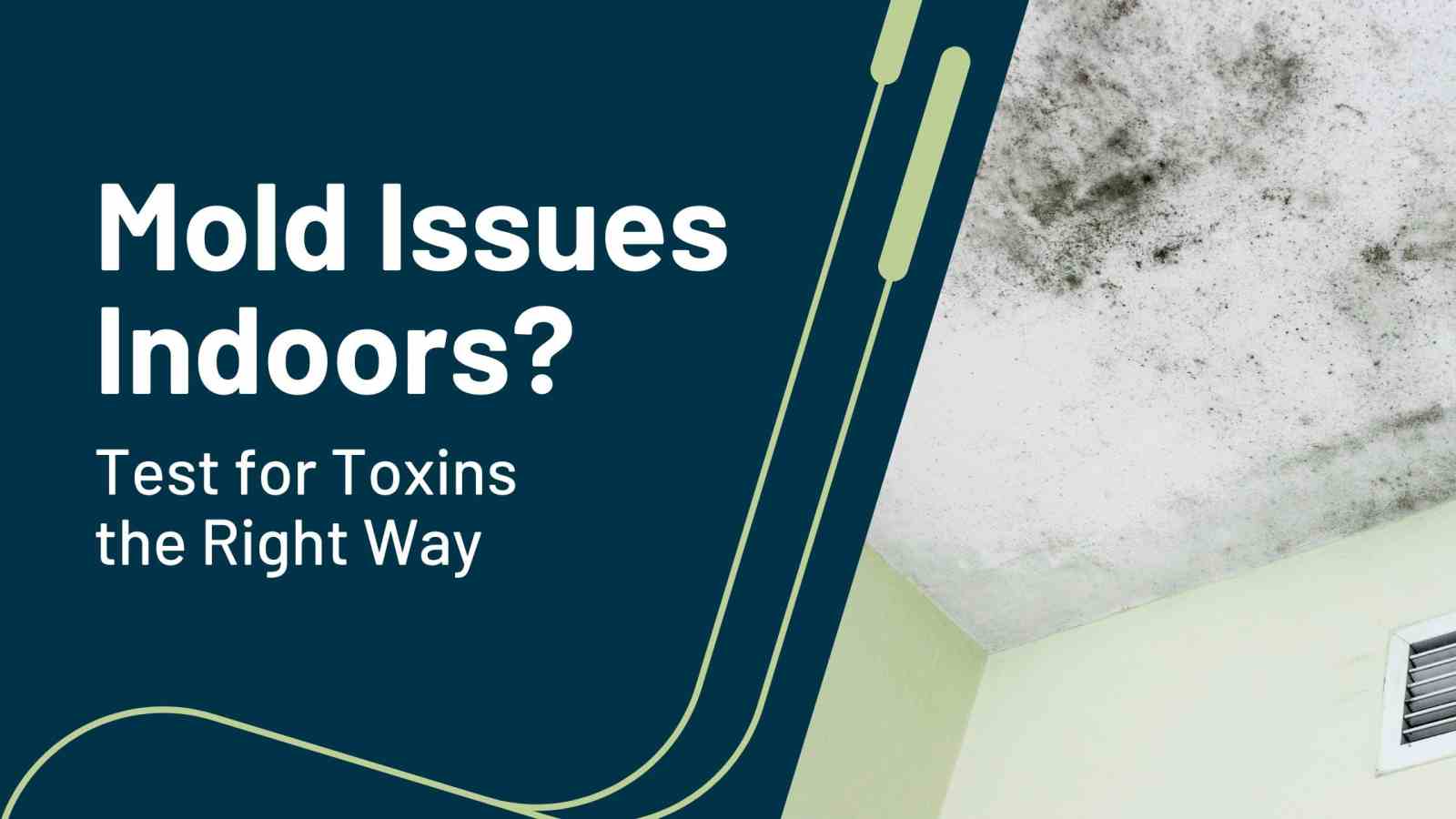
Dampness — and the mold, fungi, and bacteria that follow — is significantly associated with health effects including upper respiratory tract symptoms, coughing and wheezing, and asthma [8]. Mold that looks like dust can often be overlooked as an issue.
Testing for mold should be performed inside homes and buildings generally if:
- There are persistent musty odors
- Dark spots exist on walls, ceilings, or floors
- Known water damage events occurred
- Humidity is high (bathrooms; basements)
- Condensation builds up regularly on windows or pipes
- Flooding has occurred
- Persistent allergy/asthma problems exist
Most research on dampness does not indicate that mold or bacteria are the cause of the aforementioned illnesses, per se, but the link between these biological agents and adverse health outcomes is strongly suspected.
How to Test for Mold at Home
Testing for mold can be done using DIY methods or lab methods. DIY mold detection kits include petri-dish or agar plate test kits. But are DIY home mold test kits accurate? Because they lack the precision of mold analysis laboratories and cannot identify mold types, we can’t fully endorse them. A mold test kit that utilizes analytical laboratory analysis is essential if:
- Precise results are required for remediation
- Mold is suspected as source of health concern
- Legal disputes over water damage require mold testing
- Result validation is needed for DIY tests
Mold testing laboratories provide high accuracy, low-concentration detections, and quality control and assurance. A drawback of analytical testing is that results take longer to receive than a DIY test. Standard mold testing methods using vacuum or swab samples ensure that results are analytically reliable. Vacuum sampling has the advantage that it can work well to capture mold issues on carpets and furniture that swab samples cannot reach. Consider SimpleLab's Mold Dust Surface test
Mold Dust Surface Test
$400
Test for Allergens in Dust
Environmental allergens — such as dust mites, pet dander, and cockroach droppings — are common in indoor dust and can be significant triggers for allergic reactions and asthma. While mold is an allergen, there is a wide range of additional environmental allergens, including pet dander, rat and rodent dander, and dust mites. You should test for allergens in residential dust if:
- Persistent allergy or asthma symptoms occur
- Pets are present in the home
- Dust buildup is noticeable on surfaces
- Bedding, upholstery, or carpets are not regularly cleaned
- Pest infestations (e.g., cockroaches or rodents) are observed
- Live in urban areas
- Children are in the home
Exposure to allergens is associated with respiratory effects like sneezing, nasal congestion, itchy or watery eyes, wheezing, and exacerbated asthma symptoms.
How to Test for Allergens in Dust
Testing for allergens in dust must be done in an analytical laboratory. DIY methods to test for allergens like cat and dog dander or dust mites do not exist.
You should consider analytical lab testing if:
- Precise results are required for identifying an allergy trigger
- Allergens (e.g. cat, dog, rodent, cockroach, dust mite) are suspected as source of health concern
Laboratory testing for environmental allergens ensures high accuracy, low-level allergen detection, and reliable quality control. Vacuum sampling has the advantage that it can work well to capture allergen issues in carpets and furniture. Consider SimpleLab's Basic Indoor Allergen test
Basic Indoor Allergen Test
$350
Key Takeaways
- Dust is a complex phenomenon that carries exposure risks most relevant for the indoor environment.
- While the range of contaminants in dust is wide, dust testing for lead, asbestos, mold, or environmental allergens are often necessary.
- Test for dust in a lab if:
- You live in an older home
- You live near local industrial activity
- You are undergoing renovations
- You see persistent dampness or water damage
- You have respiratory symptoms without a clear cause
- Lab testing ensures reliability, high accuracy and precision, and the detection of low levels of potential toxic contaminants. DIY testing is less accurate than lab testing and in some cases does not exist (asbestos, allergens).
Jess leads the scientific program at SimpleLab and oversees all analytical and data products. She holds a PhD in water resources and a Master’s in Environmental Engineering from UC Berkeley.
About SimpleLab
SimpleLab combines world-class laboratory science with customer service to ensure testing your environment is simple, fast and factual. Everything we do is driven by data and supported by a team of experts ready to answer your questions.