Soil Results: Benchmarks, Background Concentrations, and What It All Means
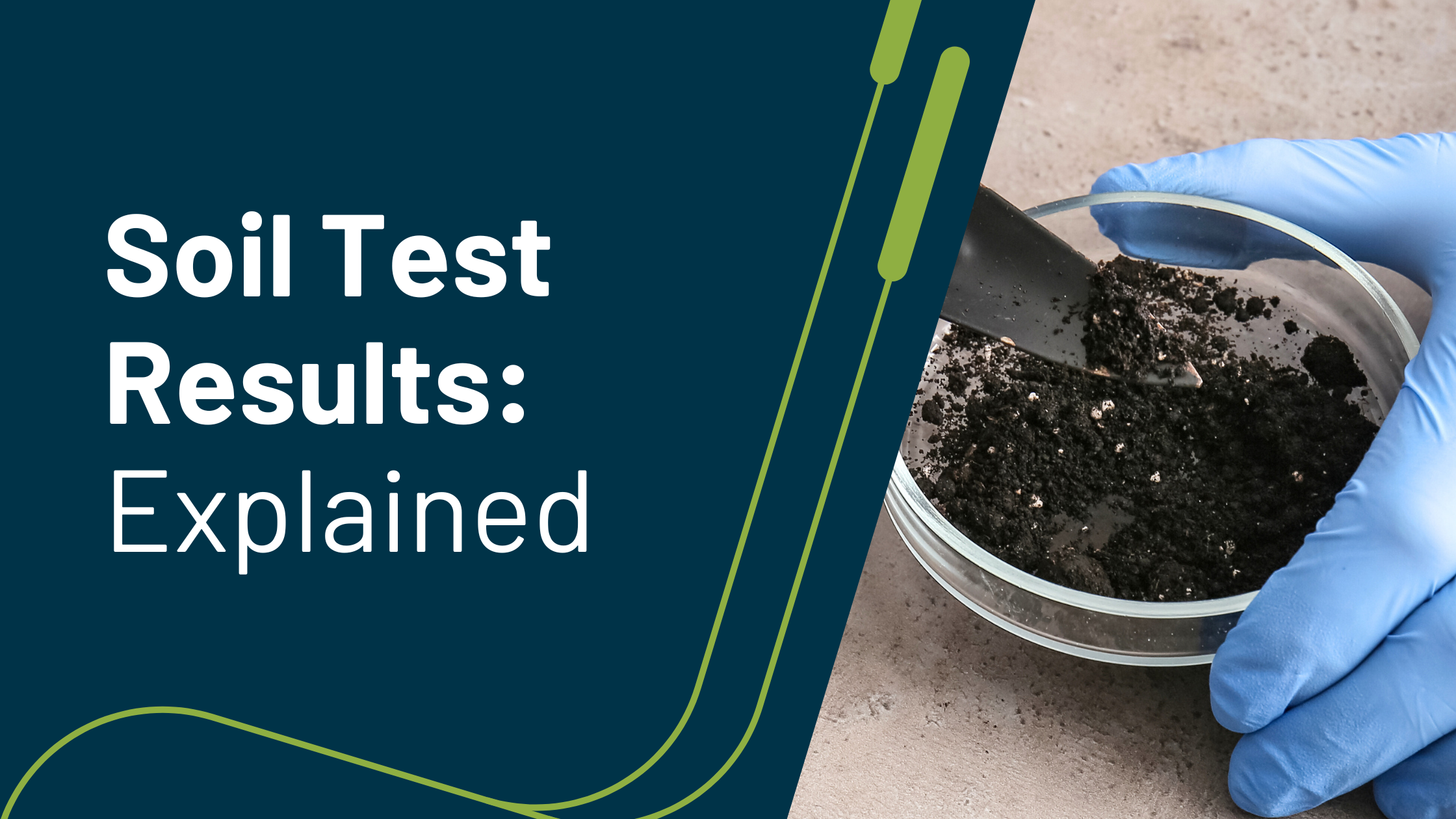
Getting your soil tested is only the first step in understanding your potential for exposure to hazardous contaminants. In order to understand what the testing results mean, you need to compare them to health-based benchmarks and have an understanding of background levels of certain analytes in your area.
We’ll explain the benchmarks we use as comparisons for soil contaminant concentrations and discuss the context given by local background concentrations.
Table of Contents:
- Benchmarks We Use
- The Importance of Background Concentrations
- How to Interpret Your Results
- Key Takeaways
Benchmarks We Use
When you receive the results of your soil testing kit, your first thought is probably “is this soil safe?” The contaminant levels present in your soil alone are not enough to answer that question, you need to compare them to some “safe level” — or benchmark — to determine their potential for causing harm.
SimpleLab provides four different benchmarks for comparison with your contaminant levels:
- US EPA Regional Screening Levels (EPA RSLs)[1]
- California Department of Toxic Substances Control Screening Levels (DTSC SLs)[2]
They are both for both cancer and non-cancer endpoints. Both the EPA RSLs and DTSC SLs are calculated specifically for outcomes of an increased risk of cancer or the potential for other non-cancer impacts (e.g., impacts to specific organs), which results in separate benchmarks for each.
All of these benchmarks are guidance levels intended to assess contaminated sites for the potential need for remediation or other considerations. They are not intended to be interpreted as direct indicators of risk.
These are also very typical for soil-related applications. Most benchmarks are created for use in remediation situations, not necessarily for direct human health risk assessment. However, these benchmarks are calculated with potential health risk in mind and provide good insight into the relative contaminant levels in a soil sample. That is why we believe they are useful for comparison to measured contaminant concentrations.
Importance of Background Concentrations
One very important point to be aware of when interpreting soil results is that many of the contaminants of concern in soil are naturally occurring. In fact, some compounds occur naturally at levels near or above health-based benchmarks in certain locations. This is often true for arsenic, for example.
This means that while health-based benchmarks may indicate that a compound like arsenic is elevated in a soil sample, it is possible that the compound is locally naturally occurring at such levels and thus cannot easily be reduced on a large scale. Because soil benchmarks are meant to inform remediation decisions, it is important to view them in context of background concentrations with the understanding that a benchmark that is lower than background levels cannot (in most cases) be met. Some states factor background concentrations into their guidance values (e.g., Minnesota).[3]
How to Interpret The Results of Your Soil Test
Once you get your results back from the laboratory, it’s time to put them in context.
-
Compare your results to health-based benchmarks.
We provide the cancer and non-cancer endpoint guidance values for both the EPA RSLs and the DTSC SLs. These benchmarks are calculated similarly, based on the potential for increasing risk of either cancer or other non-cancer health impacts resulting from long term, residential exposure (e.g., gardening, children playing, etc.). But they may differ based on slightly different assumptions or calculation techniques. You can also pull other relevant soil benchmarks for comparison, especially those used by your state’s environmental or health department.
-
Compare your results to background concentrations.
If certain metals (like arsenic, lead, or chromium) are elevated, it’s worth checking whether those concentrations are typical for your region. Many state environmental agencies publish soil background levels. You can also review local geological survey data. When a contaminant level is close to or only slightly above what’s naturally found in your area, it is unlikely that its elevated concentration is due to a contamination event. This context impacts potential remediation actions.
-
Consider the magnitude of any exceedances.
Not all exceedances are equal. A result just slightly above a benchmark may indicate minimal concern, while a result that is many times the benchmark value might warrant further investigation — especially if it’s in an area where people (or pets) spend time frequently.
-
Determine next steps.
If you have identified contaminants of concern in your soil, it may be appropriate to consider remediation. However, the appropriate remediation action(s) will be determined by both the origin of the contaminant itself as well as the potential exposure pathways based on how you use the space.
For example, a contaminant that is naturally occurring above benchmark values can be avoided for a person who plans to garden in their yard by building raised beds, covering the native soil and adding clean soil on top. On the other hand, contaminants that are present due to a distinct contamination event can possibly be removed by excavating the immediate area. And if contamination is present in an area with no planned use, you may be able to fence it off to prevent contact, regardless of origin.
-
Reach out for help if you’re unsure.
If you have results that are well above screening levels or you’re not sure how to interpret them, it’s a good idea to consult with your local health department or agricultural extension. They can help determine whether additional testing or specific actions (like adding clean topsoil or avoiding certain uses) are recommended.
Key Takeaways
- Compare your soil results with health-based benchmarks to determine if there are potential health risks due to soil exposure.
- Always check local background levels of contaminants because they might naturally exceed official guidelines.
- Base remediation activities on the contaminant's origin and how the space is used. Contact your county health department or local agricultural extension for assistance.
Questions? Contact Us

You can send our team a message any time at hello@gosimplelab.com and we will be standing by to help out and do our best to meet your soil testing needs!
Jess leads the scientific program at SimpleLab and oversees all analytical and data products. She holds a PhD in water resources and a Master’s in Environmental Engineering from UC Berkeley.
About SimpleLab
SimpleLab combines world-class laboratory science with customer service to ensure testing your environment is simple, fast and factual. Everything we do is driven by data and supported by a team of experts ready to answer your questions.